Swing Gate Repair in McKinney, TX
A swing gate hangs its full weight on the hinge side. When it sags, drags or stops latching, the post, hinges or operator arm are usually behind it.
Open 24 hours, 7 days a week
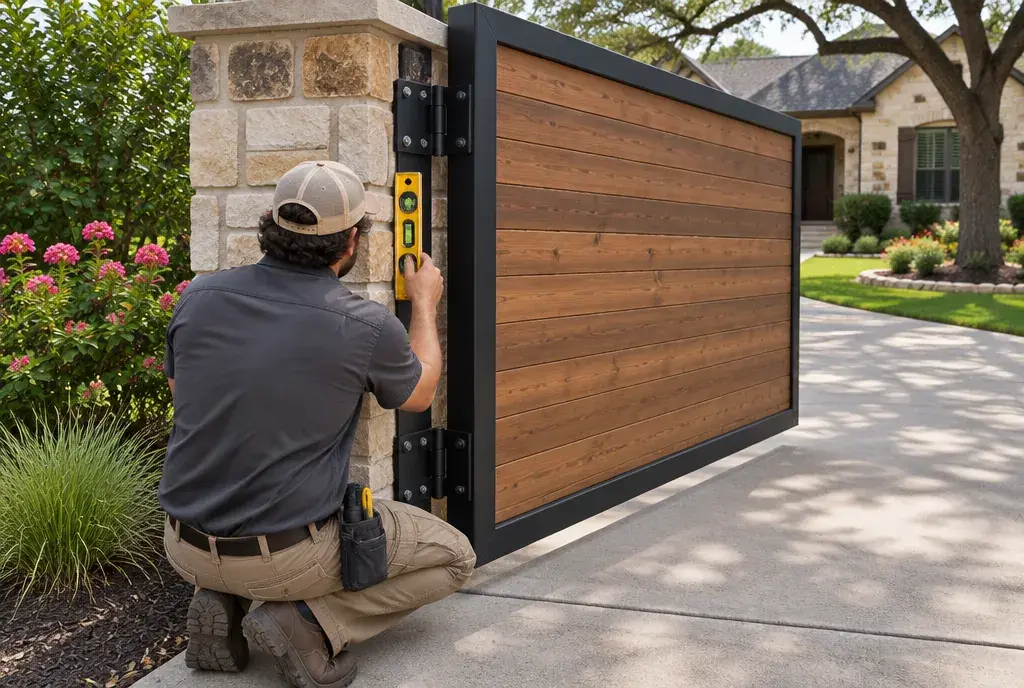
Signs you need this repair
The gate sags or drags
Worn hinges, a leaning post or a frame that has gone out of square will drop the latch side down.
Double gates do not meet
One leaf has moved or the limits have drifted. Latches and magnetic locks will not engage until the leaves line up.
It closes too hard
Slamming points to bad limit or speed settings, or a failing arm. It wears the gate and the operator out quickly.
It struggles in the wind
A solid-panel gate acts like a sail. Strong gusts can trip the operator force limit and cause it to stop or reverse.
One leaf moves and the other does not
On a dual gate this suggests a problem with one arm, its wiring or its side of the control board.
Hinges and posts
Every swing cycle loads the hinges and the post they are mounted on. Worn hinge pins let the leaf drop a little at a time, and the operator has to work harder as a result. Replacing hinges or adding adjustable ones is often enough to bring a gate back.
A leaning post is a more serious job. Clay soils that shrink and swell can loosen a footing over the years, and a heavy iron leaf makes the movement worse. Correcting the post may be the only lasting fix, because adjusting everything else will only hide it for a while.
Operator arms
Swing gates use linear arms, articulated arms, or operators buried at the post. Arms have bushings, pins and mounting brackets that loosen with use, and a loose bracket can look just like a failing motor.
Geometry matters as well. If the mounting points are off, the arm has poor leverage at one end of travel, and the gate may stall just before fully opening or closing.
Latches, stops and locks
Positive stops give the gate a fixed end point and take stress off the operator. When stops are missing or damaged, the arm absorbs the impact on every cycle. Latches and magnetic locks also depend on accurate alignment, so a gate that has sagged slightly may stop securing properly before it stops moving.
Safety on swing gates
The area where a swing gate opens toward a wall, fence or parked car is an entrapment zone. So is the space at the hinge. UL 325 calls for entrapment protection on operators, and controls should be mounted at least six feet from the gate so nobody can reach them while touching the gate. Emergency access devices are the exception.
If a walk-through path crosses the gate swing, or children play near the driveway, mention it when we talk. It changes what we look for.
Check these before you call
- Look at the gap at the latch side compared with the top of the gate
- Check hinges and arm brackets for loose bolts or movement
- Sight along the post to see whether it has started to lean
- See whether the bottom of the gate is scraping the drive
- Photograph the hinge side and send it with your request
Safety first
Stay out of the swing path while the gate is moving, and keep hands away from the hinge side and arm. If a post is leaning noticeably, keep the gate open and stay clear, because a heavy leaf can fall.
Common questions
Why is my swing gate sagging?
Worn hinges and leaning posts are the two most common reasons. Frames can also go out of square, especially on wider leaves.
Why do my double gates no longer line up?
One leaf has dropped or shifted, or the limit settings have changed. Each side has to be checked and adjusted individually.
Can wind damage my automatic gate?
Yes. High winds strain arms and brackets and can trip force limits, and solid gates catch the most wind.
Can a dragging gate damage the operator?
Yes. A dragging gate makes the motor and gearbox work harder on every cycle, so it is worth correcting early.
Related gate services
Need swing gate repair in McKinney?
Open 24 hours, 7 days a week. Call for pricing on your gate. Ask about current discounts when you call.